|
How we catalyse behaviour change |
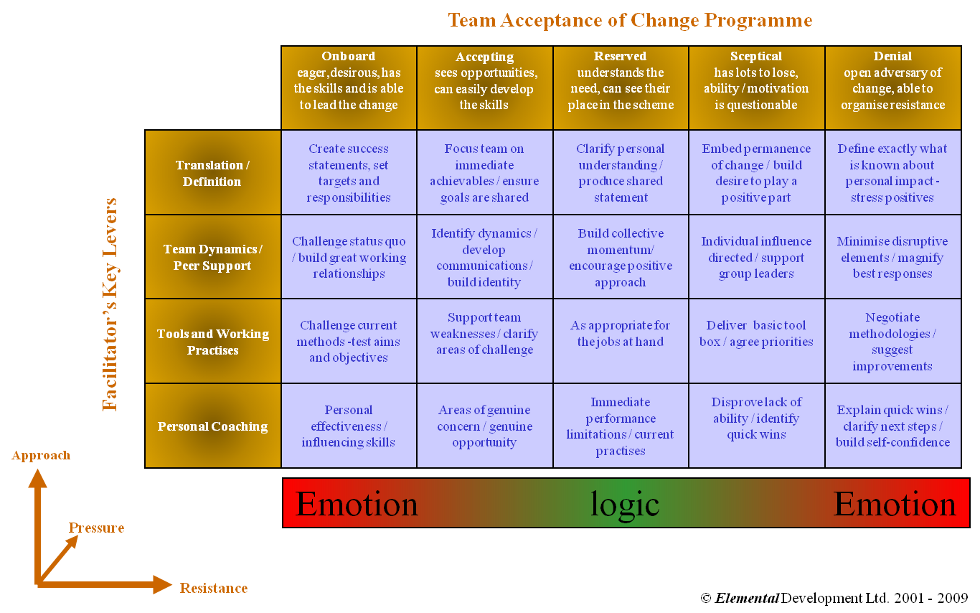
With any programme there needs to be an innate level of flexibility to ensure that individuals and teams gain as much as possible from group learning events. The diagram below attempts to display some of the key levers available for different states of learner acceptance.
Particular session throughout a programme will be developed to achieve the twin aims of Increasing the Team’s acceptance of change Focusing attention on effective behaviours By tackling these areas, we can move even a largely resistant team as far and as quickly as possible. | team acceptance of need for change |  | | facilitator's key levers |  | | Onboard | Accepting | Reserved | Sceptical | Denial | | | | | | | Create success statements, set targets and responsibilities | Focus team on immediate achievables / ensure goals are shared | Clarify personal understanding / produce shared statement | Embed permanence of change / build desire to play a positive part | Define exactly what is known about personal impact - stress positives | | Challenge status quo / build great working relationships | Identify dynamics / develop communications / build identity | Build collective momentum/ encourage positive approach | Individual influence directed / support group leaders | Minimise disruptive elements / magnify best responses | | Challenge current methods -test aims and objectives | Support team weaknesses / clarify areas of challenge | As appropriate for the jobs at hand | Deliver basic tool box / agree priorities | Negotiate methodologies / suggest improvements | | Personal effectiveness / influencing skills | Areas of genuine concern / genuine opportunity | Immediate performance limitations / current practises | Disprove lack of ability / identify quick wins | Explain quick wins / clarify next steps / build self-confidence |
|